Crawlspace and subfloor moisture defense in Casper addresses the unique physical strains caused by Natrona County soil and high freeze-thaw cycles. Properties located near the North Platte River corridor, Paradise…
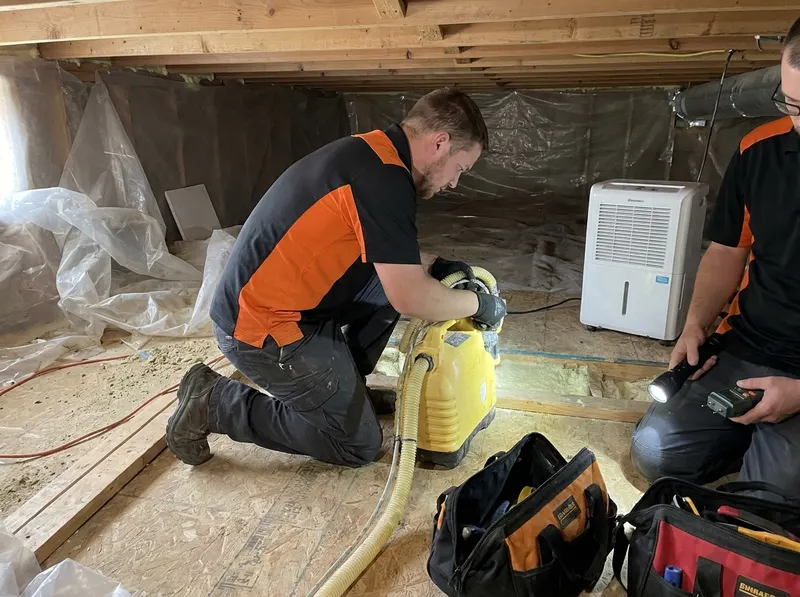
Crawlspace and subfloor moisture defense in Casper addresses the unique physical strains caused by Natrona County soil and high freeze-thaw cycles. Properties located near the North Platte River corridor, Paradise Valley, and the low-elevation alluvial ground of Bar Nunn experience seasonal water-table rises during spring runoff. When unmitigated ground moisture evaporates upward, it condenses against cold subfloor rim joists and subfloor plywood sheeting. This raises subfloor framing moisture content above 18 to 20 percent, creating the exact ecological conditions required by structural wood-decay fungi, powderpost beetles, and subterranean termites. Simultaneously, ambient warmth in damp under-home environments attracts deer mice and voles seeking refuge from severe winds moving off Casper Mountain.
Subfloor moisture mitigation fits residences showing elevated wood humidity, fallen insulation batts, or sustained insect migrations through floor penetrations. For dry structural voids with active pest tunnels alone, mechanical rodent trapping and perimeter chemical barriers suffice. When relative humidity beneath floor joists consistently exceeds 70 percent, surface insecticide treatments fail because the moisture breaks down chemical residuals within 30 days. The operational trade-off requires sealing the exposed soil with heavy-gauge polyethylene rather than relying solely on exterior foundation vent airflow, as high winter drafts across Wolf Creek and Centennial Hills can freeze exposed domestic plumbing lines located directly inside vented crawl voids.
Standard installations employ 10 to 20-mil string-reinforced vapor retarders overlapped a minimum of 12 inches and anchored to interior foundation masonry with heavy-duty mechanical fasteners. Foundation vents are evaluated to prevent moisture-laden air intrusion during wet months while maintaining freeze protection against below-zero winter temperatures typical of Mountain View, Southridge, and Big Horn Terrace. Where structural timber shows localized surface fungal growth, technicians apply direct disodium octaborate tetrahydrate solutions to permanently halt wood deterioration and render the cellulose unpalatable to wood-destroying insects without discharging airborne volatile organic compounds into living spaces above.
Every job gets a firm, written price after a free on-site visit.
Tell us about your crawlspace and subfloor moisture defense job in Casper and we'll send a clear, written quote, usually the same day.
 Savero Pest Removal