Subterranean termite soil treatment protects structural lumber by binding a liquid termiticide directly to Natrona County soils around footings and grade beams. Native Reticulitermes species thrive within subterranean…
Subterranean termite soil treatment protects structural lumber by binding a liquid termiticide directly to Natrona County soils around footings and grade beams. Native Reticulitermes species thrive within subterranean soil moisture along the North Platte River corridor and low-lying alluvial plains in Paradise Valley and Garden Creek. As Casper properties shift through sub-zero winter freezes and sudden spring thaws, subterranean termites migrate deeper below the freeze line, ascending along exterior concrete foundation cracks and utility penetrations once exterior surface soils reach 50 degrees Fahrenheit. Retail topical sprays leave surface residues that degrade under high ultraviolet radiation and dry high-wind conditions, failing to reach insects traveling 18 to 36 inches beneath grade.
A complete continuous trenching treatment suits properties showing shelter mud tubes along stem walls or crawlspace plate lines in established subdivisions like Mountain View, Fairview, and Southridge. In contrast, bait station installations fit locations with inaccessible structural perimeters, high interior water tables, or foundation walls adjoining direct water features where soil displacement is structurally unviable. The trade-off between the two approaches balances immediate continuous perimeter defense against longer-term bait-monitoring intervals: liquid barrier soil treatments deliver active colony-transfer chemistry within 30 to 90 days, while monitoring bait arrays require periodic station refills over several inspection cycles.
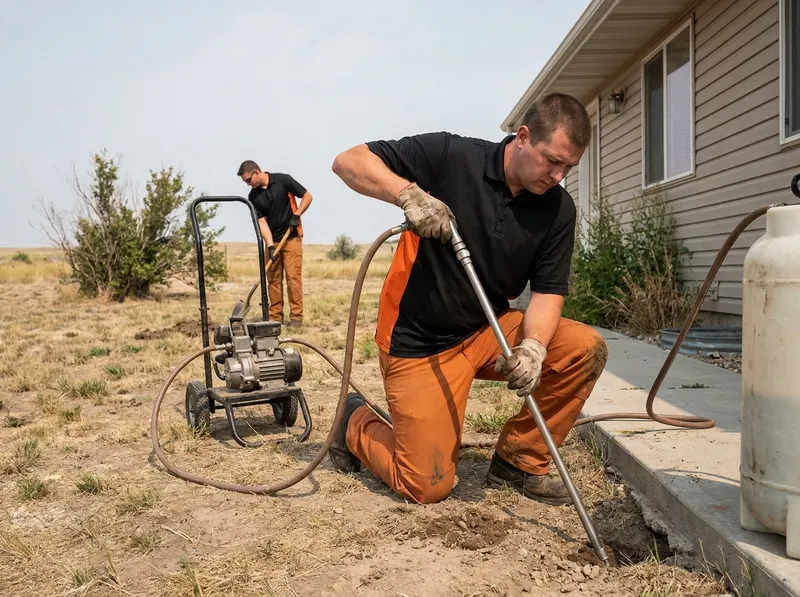
Technicians mechanically excavate continuous 6-inch by 6-inch trenches directly adjacent to the exterior foundation walls, applying 4 gallons of finished termiticide emulsion per 10 linear feet per foot of depth down to the top of the footing. Where concrete flatwork abuts living space, such as driveways, patios, or attached garage slabs in Centennial Hills and Wolf Creek, vertical core drilling occurs at 12-inch intervals through the slab, injecting sub-surface termiticide before sealing drill holes flush with exterior-grade hydraulic cement. Technicians operate directly in Natrona County without third-party dispatch brokers, employing EPA-registered non-repellent compounds that bond tightly with regional clay and sandy-loam soils, preventing drift toward home gardens or domestic pets once bound.
Every job gets a firm, written price after a free on-site visit.
Tell us about your subterranean termite soil treatment job in Casper and we'll send a clear, written quote, usually the same day.
 Savero Pest Removal